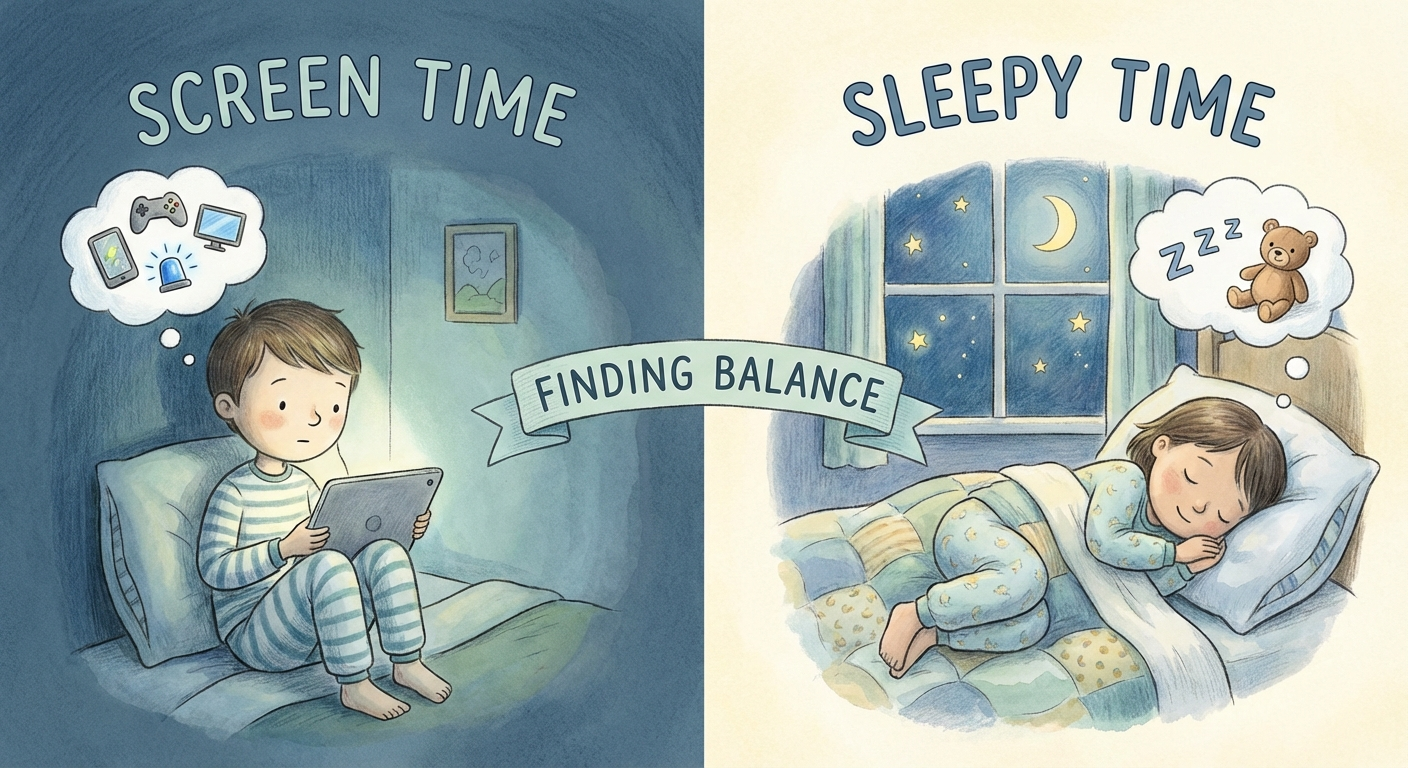
The Screen Time and Sleep Connection: What Every Parent Needs to Know
Let me paint a familiar picture: it’s 8 PM, you’ve announced bedtime, and suddenly your child is wide awake, wired, and insisting they’re “not even tired.” Meanwhile, they’ve been glued to a tablet for the past two hours.
Sound familiar? You’re living the screen-sleep struggle that millions of parents face every night.
Here’s the thing—the connection between screen time and sleep isn’t just about kids “not wanting to go to bed.” There’s actual science behind why screens make sleep so difficult, and understanding it can help you create a plan that works for your family.
The Science: Why Screens Steal Sleep
Blue Light and Melatonin
All screens emit blue light—a wavelength that’s especially effective at suppressing melatonin, the hormone that tells our bodies it’s time to sleep. When kids use devices in the evening, their brains receive signals that it’s still daytime.
Research shows that just two hours of screen exposure in the evening can suppress melatonin by about 22%. For kids whose melatonin systems are still developing, the effect can be even more significant.
The Stimulation Factor
Beyond the light issue, screens are designed to be engaging. Whether it’s a video game, a YouTube rabbit hole, or an intense movie, content keeps the brain active and alert.
When a child goes from high-stimulation screen time directly to bed, their brain is still buzzing. It’s like asking someone to fall asleep immediately after a roller coaster ride.
The “Just One More” Trap
Apps and games are literally designed to keep us coming back. Autoplay features, cliffhangers, and reward systems create a dopamine loop that makes it incredibly hard to stop—even for adults with fully developed impulse control.
For kids, saying goodbye to screens can feel almost physically difficult. That whining and protesting isn’t just defiance; their brains are actually experiencing a kind of withdrawal.
How Screen Time Shows Up in Sleep Problems
The effects of screen time on sleep can look different depending on your child’s age:
Toddlers and Preschoolers
- Difficulty settling at bedtime
- Increased night wakings
- Fighting the bedtime routine
- Nightmares or more active sleep
School-Age Kids
- Taking longer to fall asleep
- Restless sleep
- Difficulty waking in the morning
- Daytime sleepiness affecting school performance
Tweens and Teens
- Significantly delayed sleep onset
- Chronic sleep deprivation
- Mood changes and irritability
- Increasing dependency on screens to “relax”
The Real-World Challenge
I know what you’re thinking: “That’s great, but screens are part of our life.” And you’re right.
Complete screen elimination isn’t realistic for most families. Kids use devices for school, socializing, and yes, entertainment. The goal isn’t to demonize technology—it’s to create boundaries that protect sleep while still allowing screen time that serves your family.
Practical Strategies That Actually Work
1. Create a Tech Curfew (And Stick to It)
Establish a specific time when all screens go off—ideally at least one hour before bedtime, but 90 minutes is even better. This gives the brain time to wind down and melatonin production to kick in.
Tips for making it stick:
- Set a consistent time that doesn’t change on weekends
- Use a timer or alarm so you’re not the bad guy
- All family members participate (including parents!)
- Create a charging station outside of bedrooms
2. Replace Screen Time with Calming Activities
The time between screens off and lights out needs to be filled with something—otherwise, kids will just ask for screens back.
Ideas that work:
- Reading together (or independently for older kids)
- Audiobooks or calm music
- Art supplies and coloring
- Building blocks or puzzles
- Bath time as part of the routine
- Gentle stretching or kid-friendly yoga
3. Make Bedrooms Screen-Free Zones
This is a hill worth dying on. When screens live in bedrooms, the temptation is too great—even for kids with the best intentions.
Remove TVs, tablets, and phones from bedrooms entirely. For teens who argue they need their phone as an alarm, buy them an actual alarm clock. It’s worth the $15.
4. Adjust Screen Settings
If evening screen use is unavoidable, minimize the damage:
- Enable “night mode” or “warm display” settings
- Turn down brightness
- Use blue light filtering glasses (they’re available for kids too)
- Choose calmer content—no action games or intense shows
5. Fill the Daytime with Active Play
Kids who are physically active during the day sleep better at night—and they’re also less likely to crave screen time. When children are bored and understimulated, screens become the default.
Prioritize outdoor play, physical activities, and hands-on experiences. A tired body is much more ready for sleep than one that’s been sitting all day.
6. Model Healthy Screen Habits
I know, I know. But kids are always watching. If you’re scrolling your phone at dinner and in bed, they notice. Showing them that adults also have screen boundaries makes the family rules feel fairer.
What About Screen Time During the Day?
Daytime screen time affects nighttime sleep too, especially for younger children. High quantities of daily screen time have been linked to:
- Shorter overall sleep duration
- More sleep problems
- Decreased sleep quality
The American Academy of Pediatrics recommends:
- Under 18 months: Avoid screens (except video chatting)
- 18-24 months: High-quality content, watched with a parent
- 2-5 years: 1 hour or less of high-quality programming
- 6 and older: Consistent limits that don’t interfere with sleep, physical activity, and other healthy behaviors
When Kids Push Back (And They Will)
Implementing screen boundaries is rarely met with enthusiasm. Expect resistance and have a plan:
“But I’m not tired!” Explain that their brain is tricked into feeling awake because of the screen. Their body needs sleep even when their mind doesn’t feel tired.
“Everyone else gets to stay up on their tablet!” Stay calm. “Different families have different rules. In our family, we protect sleep because it’s important for your health.”
“I need it to relax!” Acknowledge the feeling while redirecting. “I know screens feel relaxing, but they actually make it harder for your brain to rest. Let’s find something else that helps you wind down.”
Natural Alternatives for Winding Down
If your child is used to screens as their relaxation tool, they’ll need alternatives:
- Deep breathing exercises: Simple techniques kids can do in bed
- Body scan relaxation: Tensing and releasing muscle groups
- Visualization: Imagining peaceful scenes
- Aromatherapy: Lavender in a diffuser or on bedding
- Comfort objects: Weighted blankets, stuffed animals, or special sleep toys
- Natural calming products: Some families use gentle sleep patches with ingredients like lavender and chamomile to support the wind-down process
The goal is to help kids develop multiple tools for relaxation, so screens aren’t their only option.
The Long Game
Changing screen habits takes time. There might be rough nights, complaints, and “I hate this” declarations. Stay the course.
Within a few weeks of consistent boundaries, most families notice:
- Easier bedtimes
- Less bedtime resistance
- Children falling asleep faster
- Better sleep quality
- Improved morning wake-ups
- Fewer meltdowns in the evening
Those benefits are worth the initial pushback.
Start Tonight
You don’t have to overhaul everything at once. Pick one change:
- Move screens off 30 minutes earlier than usual
- Remove devices from bedrooms
- Swap the last hour of screens for reading time
Small shifts add up. And your child’s sleep is worth protecting.
What screen time boundaries work in your home? I’d love to hear what’s been successful—and what’s been challenging. Drop a comment below!