Morning Routines That Set Kids Up for a Focused Day
The alarm goes off. Within 30 seconds, you’re already asking “Have you brushed your teeth?” for the third time. Shoes are missing. Lunch is half-made. Someone’s melting down over a lumpy sock. And you haven’t even made it to breakfast yet.
Sound familiar?
Here’s the thing: chaotic mornings don’t just stress you out—they affect your child’s entire day. Kids who start the day rushed, stressed, or dysregulated often carry that into the classroom, making focus and learning harder.
But a well-designed morning routine? That’s the gift that keeps giving, all day long.
Why Morning Routines Matter for Focus
The first hour of the day sets the tone for everything that follows. Research shows that:
- Stress hormones released during chaotic mornings can linger for hours, impacting attention and memory
- Consistent routines reduce anxiety by making the world predictable
- Physical activity in the morning primes the brain for learning
- Adequate breakfast provides the glucose the brain needs to focus
- Rushed, stressful starts are linked to behavior problems and academic difficulties
A calm, consistent morning isn’t just about getting out the door on time. It’s about setting up your child’s brain for success.
The Building Blocks of an Effective Morning Routine
1. Adequate Sleep (The Night Before)
Morning success starts the night before. A child who hasn’t slept enough will struggle with every part of the morning routine—and every part of the school day.
Work backward from wake-up time:
- Ages 3-5: Need 10-13 hours, including naps
- Ages 6-12: Need 9-12 hours
- Teens: Need 8-10 hours
If mornings are a constant battle, the first question to ask is: Is my child getting enough sleep?
2. A Wake-Up That Works
Harsh alarm clocks trigger the stress response. Better options:
- Natural light: Open curtains or use a sunrise alarm clock
- Gentle sounds: Gradual alarms or calming music
- Human touch: A gentle back rub or soft words
- Consistent timing: Waking at the same time every day, including weekends
Give kids a few minutes to transition from sleep to wakefulness before expectations begin.
3. Screen-Free Mornings
This one is hard but transformative. Screens in the morning:
- Steal precious time
- Are hard to transition away from
- Provide overstimulation that can affect focus all day
- Often become a bargaining chip that leads to battles
If screens are currently part of your morning, consider phasing them out. The first week might be rough, but most families find mornings run more smoothly without the TV on or the tablet in hand.
4. Movement First
Physical activity in the morning:
- Wakes up the body and brain
- Burns off restless energy before school
- Improves focus and attention throughout the day
- Boosts mood and reduces anxiety
This doesn’t have to be a workout. Options include:
- Walking or biking to school
- 10 minutes of play in the backyard
- Dancing while getting dressed
- Jumping jacks before breakfast
- Stretching or kid-friendly yoga
Even five minutes of movement can make a noticeable difference.
5. Brain-Fueling Breakfast
What kids eat in the morning directly impacts their focus. The ideal breakfast:
- Includes protein: Eggs, yogurt, nut butter, cheese, or meat
- Has complex carbs: Whole grains, oatmeal, or fruit
- Minimizes sugar: Sugary cereals and pastries lead to crashes
Quick, focus-friendly breakfast ideas:
- Eggs (any style) with toast
- Yogurt parfait with granola and berries
- Whole grain toast with nut butter and banana
- Oatmeal with nuts and fruit
- Cheese and whole grain crackers with apple slices
- Smoothie with protein powder or Greek yogurt
If your child isn’t hungry first thing, try having them get ready first and eating just before leaving. But don’t skip breakfast—even something small is better than nothing.
6. A Clear, Visual Routine
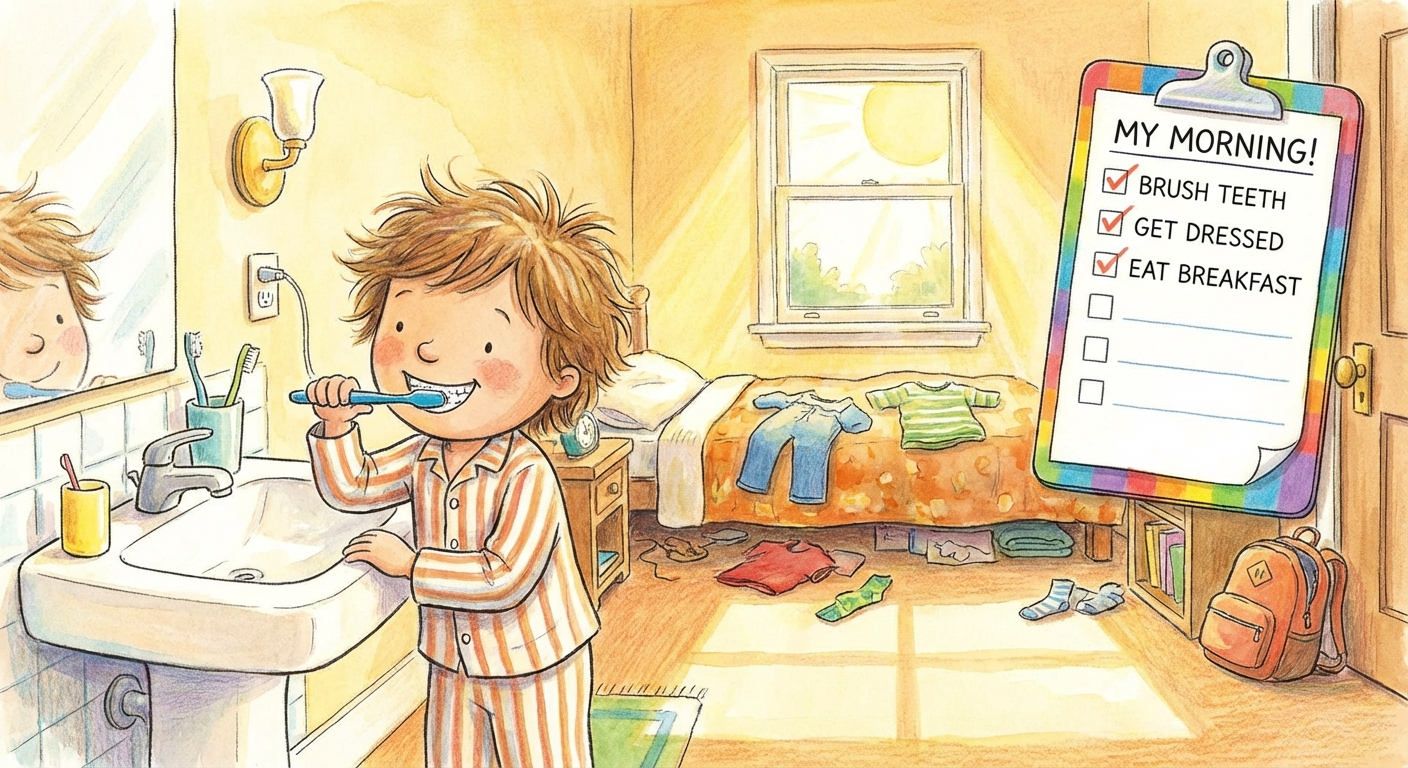
Kids do better when they know what comes next. A visible routine chart removes you from the role of constant reminder.
Creating an effective routine chart:
- Use pictures for pre-readers
- Keep it simple: 5-7 steps maximum
- Put it where they’ll see it (bathroom mirror, bedroom door)
- Let kids help create it (increases buy-in)
- Reference it rather than nagging: “What’s next on your chart?”
Sample morning routine:
- Wake up and use bathroom
- Get dressed
- Make bed
- Eat breakfast
- Brush teeth and wash face
- Get backpack and shoes
- Free time or leave for school
7. Prep the Night Before
The less you have to do in the morning, the smoother it goes.
Night-before checklist:
- Clothes laid out (including socks and underwear)
- Backpack packed and by the door
- Lunch made or lunch money ready
- Permission slips signed
- Any “must-remembers” set out visibly
- Know the plan for the morning (is anything different?)
Taking 10-15 minutes each evening to prep saves double that in morning stress.
8. Time Buffers
Plan for mornings to take longer than the minimum required. Build in:
- 10-15 extra minutes for unexpected hiccups
- A few minutes of “earned” free time if ready early (not screens!)
- Transition time between activities
Rushed kids make mistakes, forget things, and feel stressed. Time buffers change everything.
Dealing with Common Morning Challenges
”I don’t want to get dressed!”
Try:
- Lay out two outfit options the night before (choice, but limited choice)
- Use a visual timer: “Clothes on before the timer goes off”
- Let them wear pajamas to breakfast and dress after eating
- Make dressing a game or race
- Allow them to pick clothes the night before
”I’m too tired!”
Try:
- Evaluate bedtime—is it early enough?
- Open curtains for natural light exposure
- Play upbeat music to help wake up
- Have something to look forward to (a favorite breakfast, a special morning activity)
- Rule out sleep disorders if tiredness is chronic
”I don’t want to eat!”
Try:
- Offer breakfast later in the routine
- Keep portions small (less overwhelming)
- Let them choose from 2-3 options
- Make something portable for the car or walk
- Don’t force it—but don’t offer cookies instead of breakfast
”I can’t find my [shoes/backpack/homework]!”
Try:
- Designated homes for everything
- Night-before prep becomes non-negotiable
- Natural consequences: going to school without the homework
- A “last chance” basket by the door for essentials
Sibling Conflicts
Try:
- Stagger wake times if possible
- Give each child their own space for their routine
- Use a family meeting to set morning expectations
- Address underlying issues at a different time, not in the morning rush
Chronic Dawdling
Try:
- Use visual timers to externalize time management
- Break the routine into chunks with mini-deadlines
- Offer earned free time as motivation for finishing early
- Stay matter-of-fact, not frustrated (nagging makes it worse)
Natural Supports for Morning Focus
In addition to the routine itself, some natural aids can help:
Morning Light Exposure
Natural sunlight within the first hour of waking helps regulate the circadian rhythm and promotes alertness. Open curtains, eat breakfast near a window, or take a brief walk outside.
Calming Aromatherapy
Some families use energizing scents like peppermint or citrus in the morning to promote alertness. A diffuser in the bathroom or kitchen can make this easy.
Mindfulness Moment
Even one minute of deep breathing or a brief gratitude practice can set a calm tone for the day. “What are you looking forward to today?” at breakfast creates positive anticipation.
Natural Focus Support
For children who struggle with focus, some parents find that natural focus-supporting products—like patches with gentle ingredients—can be part of the morning routine, just like vitamins. They’re a drug-free way to support attention and calm.
When Mornings Keep Failing
If you’ve tried everything and mornings are still a disaster, consider:
- Is there an underlying issue? Anxiety, ADHD, sensory processing differences, or sleep disorders can make mornings exceptionally hard
- Is the routine realistic? Maybe you’re trying to fit too much into too little time
- Are expectations age-appropriate? What a 5-year-old can handle independently is different from a 10-year-old
- Are YOU regulated? Kids pick up on parent stress. If you’re frantic, they will be too
- Is there a skills gap? Sometimes kids need to be explicitly taught how to do parts of the routine
Your Morning Transformation Plan
Don’t try to overhaul everything at once. Start small:
Week 1: Establish a consistent wake time and implement night-before prep Week 2: Add a visual routine chart and eliminate morning screens Week 3: Focus on breakfast and adding a few minutes of movement Week 4: Fine-tune timing and address any lingering challenges
Small, sustainable changes add up to big transformations.
The Ripple Effect
A calm morning doesn’t just make the morning easier—it sets up your child for a better day at school, fewer behavior issues, improved focus in the classroom, and a happier mood when they come home.
And honestly? It makes your day better too. Starting the morning with connection rather than conflict changes everything.
You deserve peaceful mornings. So does your child. With the right routine, they’re absolutely possible.
What’s your biggest morning challenge? What strategies have worked for your family? Share in the comments—we’re all figuring this out together!