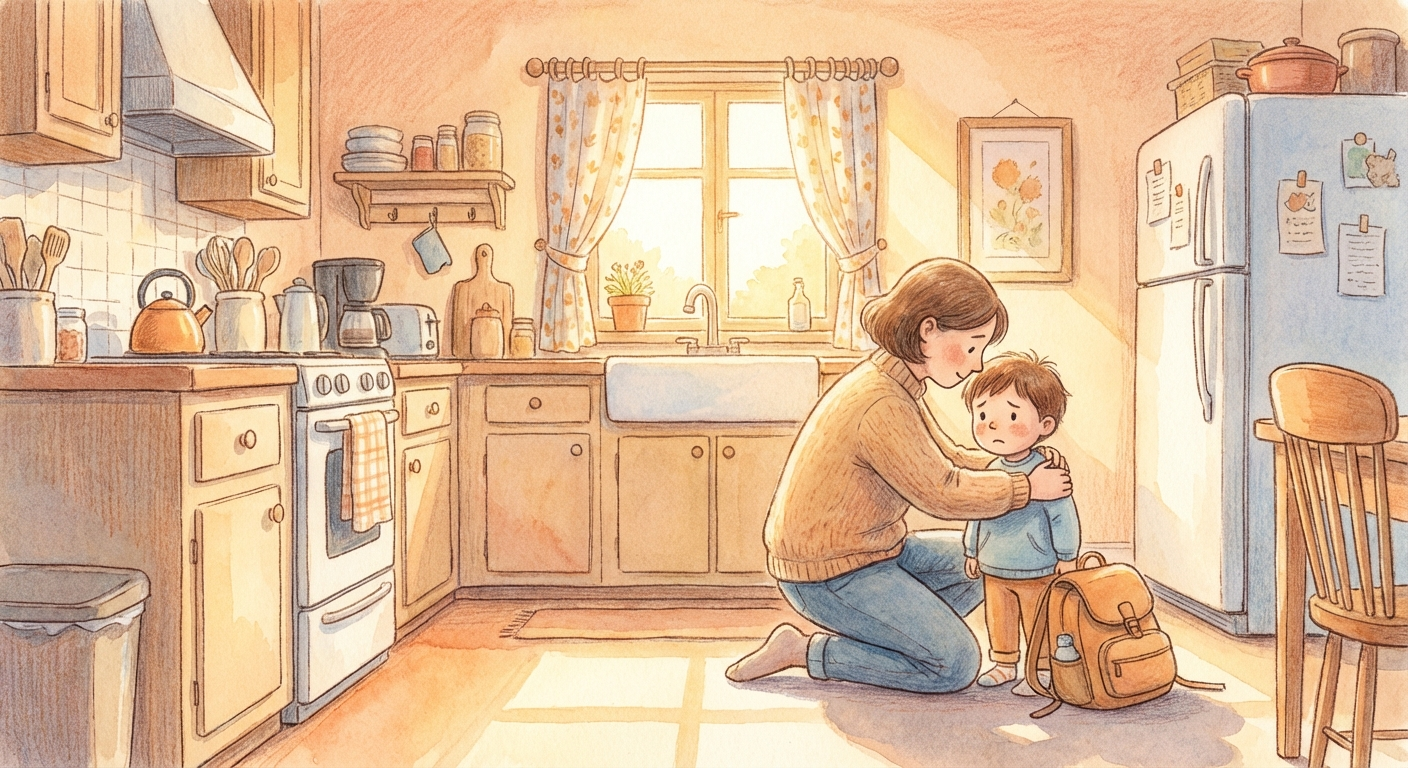
The alarm goes off, and your stomach already tightens. You know what’s coming: the tears, the “I don’t feel good,” the clinging at drop-off that breaks your heart every single time.
If school mornings in your house feel like a battle, you’re not alone. Separation anxiety affects up to 4% of school-age children, and even more experience situational anxiety around school transitions.
Here’s what actually helps — from the research and from parents who’ve been there.
Understanding What’s Really Happening
First, know that your child isn’t being dramatic or manipulative. When anxiety hits, their brain perceives genuine threat. The amygdala (our brain’s alarm system) is firing, flooding their body with stress hormones.
Your child can’t simply “calm down” on command any more than you could if someone told you to relax during a car accident. We need strategies that work with the nervous system, not against it.
The Night-Before Prep
Morning anxiety often starts the night before. Try these evening strategies:
1. Pack everything the night before Backpack by the door, clothes laid out, shoes ready. Decision-making requires mental energy your anxious child needs to save for the hard stuff.
2. Talk through the day — briefly “Tomorrow you have PE, then lunch, then reading time. After school, I’ll pick you up and we’ll get a snack together.”
Keep it factual and brief. Too much detail can feed anxiety.
3. Plant something to look forward to “I can’t wait to hear about your art project tomorrow” gives them something positive to focus on.
The Morning Routine That Reduces Anxiety
Start earlier than you think you need to
Rushed mornings = heightened cortisol = worse anxiety. Build in 15 extra minutes so there’s no time pressure.
Keep the routine predictable
Same order, every day:
- Wake up
- Get dressed
- Breakfast
- Teeth/face
- Calming activity (see below)
- Out the door
Build in a calming ritual
Many parents find that a 5-minute calm-down activity before heading out helps enormously:
- Deep breathing together
- A quick meditation app for kids
- Putting on a “calm sticker” as part of the getting-ready routine
- Reading one favorite poem or affirmation
The key is that it’s the same thing every day. The brain learns: this is the transition to school mode.
At Drop-Off
Keep goodbyes short and confident
Long, drawn-out goodbyes actually make anxiety worse. Your child reads your hesitation as confirmation that there’s something to worry about.
Instead: “I love you. Have a great day. See you at 3!” — hug, kiss, turn and walk.
Yes, even if they’re crying.
Create a goodbye ritual
A special handshake, a kiss on each palm (“love kisses” they can hold all day), a specific phrase you say every time. Rituals create security.
Don’t sneak away
It feels easier in the moment, but sneaking away erodes trust and increases anxiety long-term.
What NOT to Do
-
Don’t promise nothing bad will happen. You can’t guarantee that. Instead: “You can handle whatever happens, and I’ll be here at pickup.”
-
Don’t avoid school. Every time you let them stay home, you reinforce that school is indeed scary and avoidance works. This makes it harder next time.
-
Don’t over-reassure. Constant reassurance can actually increase anxiety. Respond once, then redirect.
When to Get Help
Some anxiety is normal, especially during transitions (new school year, new teacher, after illness or vacation). But watch for:
- Physical symptoms that don’t improve (stomachaches, headaches)
- Anxiety spreading to other areas (friends’ houses, activities)
- Significant sleep disruption
- Anxiety lasting more than 2 weeks at the same intensity
A pediatrician or child therapist can provide targeted strategies and determine if more support is needed.
The Long View
Here’s what I want you to remember on those hard mornings: You’re not failing. You’re not doing this wrong. You’re supporting a child through a genuinely hard thing, and the fact that you’re reading this means you care deeply.
Most children grow out of separation anxiety with consistent, loving support. The goal isn’t to eliminate all anxiety (impossible) but to teach them they can feel anxious AND still do the thing.
That’s a superpower that will serve them their whole lives.
What helps your anxious child face school mornings? Share what’s worked for your family.