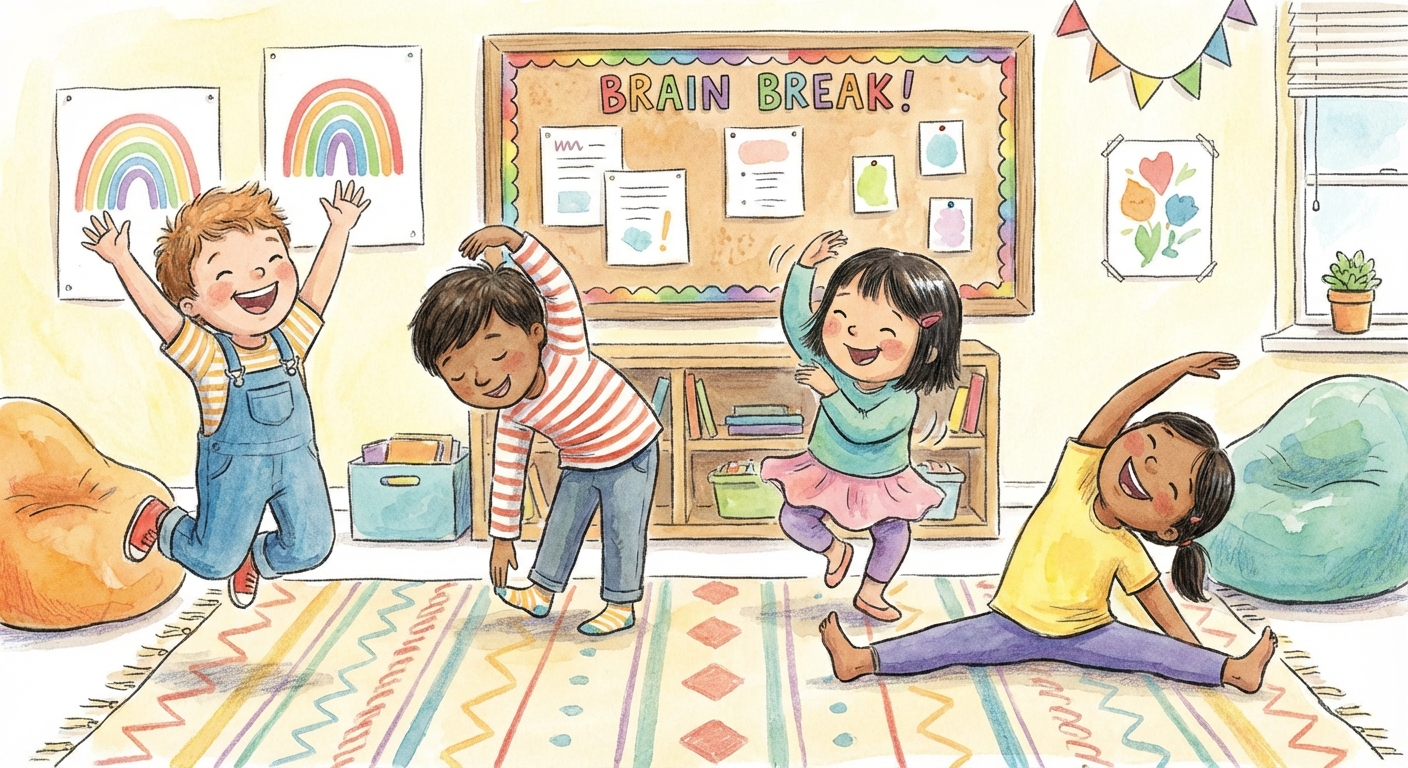
Brain Breaks That Actually Help Focus: Quick Resets for Kids
“Take a break” sounds simple enough. But not all breaks are created equal.
A five-minute break on a tablet? That’s likely to make focusing harder when it’s time to get back to work. But a well-designed brain break? That can actually reset your child’s attention and improve performance on whatever comes next.
The key is understanding what makes a break truly restorative—and having a toolkit of go-to activities that work. Let’s dive into the science and the practical strategies.
The Science Behind Brain Breaks
Our brains aren’t designed for sustained, continuous focus. Attention is like a battery that drains with use and needs periodic recharging.
When children (or adults) try to concentrate for too long without breaks:
- Attention quality declines steadily over time
- Mental fatigue leads to more errors and slower processing
- Frustration increases as work feels harder
- Retention of information decreases
Research consistently shows that brief, strategic breaks actually improve overall performance. In one study, students who took short breaks during learning sessions had better comprehension and retention than those who worked straight through.
The optimal work-to-break ratio varies by age and task:
- Ages 4-6: 10-15 minutes of focus, then a break
- Ages 7-10: 15-25 minutes of focus, then a break
- Ages 11+: 25-45 minutes of focus, then a break
What Makes a Brain Break Effective?
Not all breaks restore attention. Effective brain breaks:
1. Shift the Type of Cognitive Demand
If the work is mental and sedentary, the break should involve physical movement. If the task requires intense concentration, the break should be more free-flowing and unstructured.
2. Are Genuinely Brief
Breaks that are too long allow the brain to fully disengage, making it harder to restart. Two to five minutes is usually ideal—long enough to reset, short enough to maintain momentum.
3. Avoid Screens
This is a big one. Screens are designed to capture and hold attention. They engage the brain in a way that makes transitioning back to work difficult. A screen break isn’t really a break at all—it’s just a shift to different (often more engaging) work.
4. Involve Movement When Possible
Physical activity increases blood flow to the brain, releases neurochemicals that support focus (like dopamine and norepinephrine), and helps burn off restless energy.
5. Have a Clear Endpoint
Open-ended breaks (“go play for a bit”) can be hard to end. Breaks with built-in limits (“do 20 jumping jacks” or “dance for one song”) make the transition back smoother.
25 Brain Breaks That Actually Work
Here’s your ready-to-use toolkit, organized by type:
Movement Breaks (Great for All Ages)
1. Jumping Jacks The classic for a reason. Do 20-30 and feel the energy shift. Count them out loud for added engagement.
2. Dance Party Put on ONE song (2-3 minutes) and dance it out. When the song ends, break ends. No choosing the next song.
3. Animal Walks Walk around the room like different animals: bear crawl, crab walk, frog hops, snake slither. Switch every 30 seconds.
4. Yoga Poses Three to five simple poses: tree, downward dog, cobra, cat/cow, child’s pose. Hold each for a few breaths.
5. Jump Rope (Real or Imaginary) Jump for one minute. No rope needed—air jumping works just as well.
6. Freeze Dance Play music and dance, then pause randomly. Everyone freezes. Repeat 3-4 times.
7. Stretching Sequence Reach to the ceiling, touch toes, side stretches, shoulder rolls, neck circles. Simple but effective.
8. Simon Says Quick round of Simon Says with physical actions. Great for kids who need a mental break too.
Quick Sensory Resets
9. Cold Water Face Splash The cold sensation activates the vagus nerve and creates an instant reset. Just a splash on the cheeks works.
10. Deep Breathing (5-5-5) Breathe in for 5 counts, hold for 5, breathe out for 5. Repeat three times. Calms the nervous system.
11. Hand Massage Squeeze and massage each finger, then the palm. The pressure is grounding and calming.
12. Wall Push-Ups Stand arm’s length from a wall and do 10-15 push-ups against it. Provides proprioceptive input that helps focus.
13. Smell Something Strong A calming essential oil, a citrus peel, or even just stepping outside for fresh air. Scent can reset attention.
14. Heavy Work Push against a wall like you’re trying to move it. Carry something heavy to another room and back. This deep pressure input is regulating.
Mental Reset Breaks
15. I Spy Quick round of I Spy in the room. Engages visual scanning without being overstimulating.
16. Counting Backward Count backward from 50 (or 100 for older kids). Engages a different part of the brain than typical work.
17. Alphabet Categories Name something in a category for each letter: A is for Apple, B is for Banana (fruits); A is for Argentina, B is for Brazil (countries). Stop at a set letter.
18. Story Starters Start a silly one-sentence story, and each person adds one sentence. Set a timer for 2 minutes.
19. Observation Game Look around the room and name 5 things you can see, 4 you can touch, 3 you can hear, 2 you can smell, 1 you can taste. This is also a great grounding technique for anxious moments.
Creative Expression Breaks
20. Quick Doodle Set a timer for 2 minutes. Doodle anything—no rules, no expectations.
21. Play-Doh Moment Keep some Play-Doh on the desk. Squeeze, roll, and manipulate for a few minutes. The tactile engagement is calming.
22. Build Something Quick 3-minute challenge: build something with Legos, blocks, or even random objects. Then back to work.
23. Guided Imagery Close eyes while a parent describes a peaceful scene: a beach, a forest, floating on clouds. One to two minutes of mental vacation.
Silliness Breaks (Great for Lightening Mood)
24. Shake It Out Shake hands for 10 seconds. Then arms. Then legs. Then whole body. Get all the wiggles out.
25. Funny Faces Make the silliest face possible. Try to make each other laugh. Laughter is a genuine stress reliever and attention resetter.
How to Use Brain Breaks Effectively
Make Them Predictable
Kids do better when they know breaks are coming. “After this worksheet, we’ll do a brain break” is more effective than random interruptions.
Use a Visual Timer
When kids can see the break time counting down, the transition back to work is easier. No negotiating, no “just one more minute.”
Let Them Choose (Sometimes)
Having a menu of break options gives kids a sense of control. “Pick a movement break or a breathing break.” Autonomy increases buy-in.
Join In
When you do the jumping jacks or dance party too, it becomes bonding time rather than just a break. Kids love when parents get silly.
Notice What Works
Different kids respond to different breaks. Some need high-energy movement; others need quiet sensory input. Pay attention to what helps your child actually refocus afterward.
Keep It Short
The temptation is to extend breaks when kids are having fun. Resist. Short, consistent breaks work better than long, variable ones.
What to Avoid During Brain Breaks
Some “breaks” actually make refocusing harder:
❌ Screens of any kind (tablets, phones, TV, video games) ❌ Starting a new involved activity (crafts, complicated games) ❌ Open-ended play without a clear endpoint ❌ Food-based breaks (except for genuine hunger) ❌ Anything that ramps up rather than resets energy
The goal is to refresh attention, not to start something new that’s hard to leave.
Natural Supports for Focus
In addition to brain breaks, some natural tools can support attention throughout the day:
- Aromatherapy: Peppermint and rosemary are linked to alertness; lavender and chamomile support calm focus
- Fidget tools: For kids who need to keep hands busy
- Movement seating: Wobble cushions, stability balls, or standing options
- Natural focus patches: Some families use gentle patches with calming and focus-supporting ingredients as part of their routine
- Background white noise: Can help filter distractions
Building Break Habits
The best brain break system is one you actually use. To build the habit:
- Start with homework time. Build in breaks at natural stopping points.
- Set a timer. Both for work sessions and for breaks.
- Post a menu. Write out 5-10 break options and let kids choose.
- Be consistent. Same structure every day helps the brain expect and prepare for transitions.
- Adjust as needed. What works at age 5 might need updating at age 8.
The Bottom Line
Brain breaks aren’t rewards for finishing work—they’re tools that make work possible. A child who takes regular, effective breaks will outperform one who tries to power through.
So the next time you see focus fading, don’t wait for a meltdown. Call a brain break. Do ten jumping jacks. Reset and restart.
Your child’s brain (and your sanity) will thank you.
What are your go-to brain breaks? Share your family’s favorites in the comments—we can all use more ideas!